
Obesity is defined as an excessive accumulation of body fat beyond normal levels that is associated with health risks.¹
The body mass index (BMI) is ≥ 30 kg/m² of body surface area.
Pre‑obesity is defined as a BMI of 25.0–29.9 kg/m².
Overweight is defined as a BMI of ≥ 25.0 kg/m².
OVERWEIGHT AND OBESITY
Obesity is defined as an excessive accumulation of body fat beyond normal levels that is associated with health risks.¹
- The body mass index (BMI) is ≥ 30 kg/m² of body surface area.
- Pre‑obesity is defined as a BMI of 25.0–29.9 kg/m².
- Overweight is defined as a BMI of ≥ 25.0 kg/m².
Overall, in Germany:2

19%
of all men and women are affected by obesity.

27.6%
of women
are overweight (without obesity).

41.3%
of men
are overweight (without obesity).

1
The number of people who are overweight or obese has increased in recent years. The main reasons are thought to be changes in dietary behaviour and a widespread lack of physical activity.1
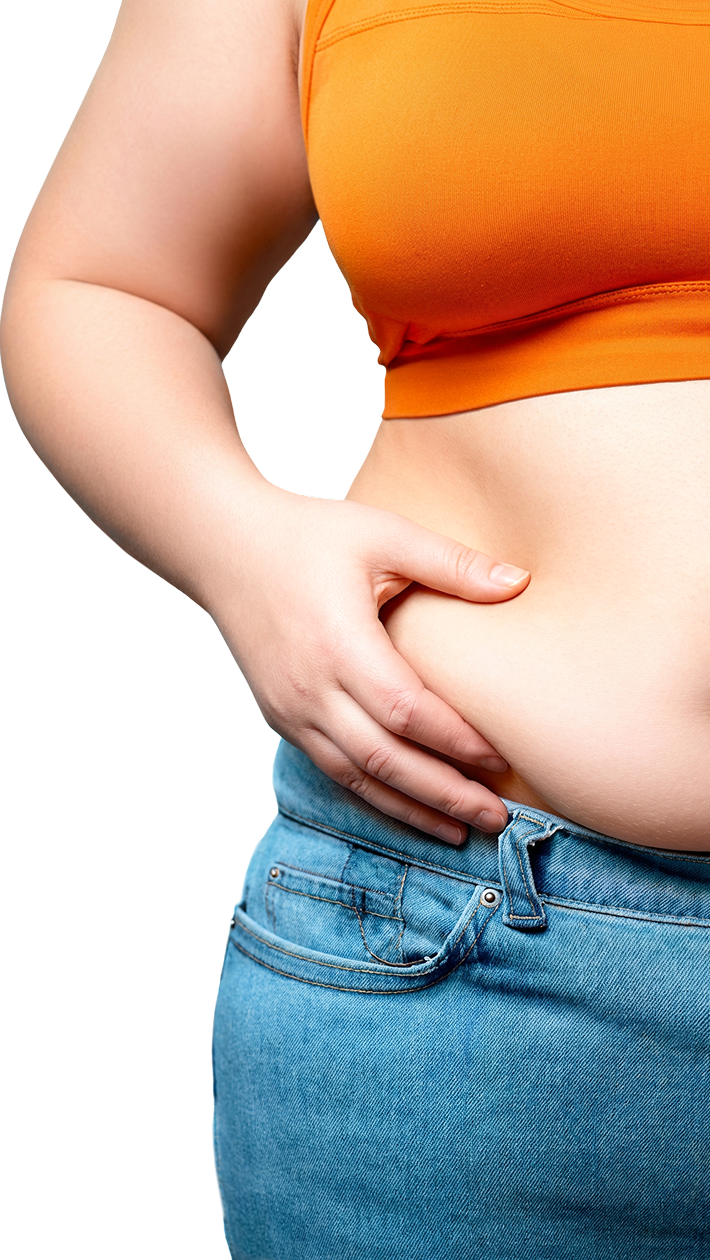
Possible causes of obesity
The following factors may contribute to overweight (in alphabetical order):1
Folgende Ursachen können zu Adipositas führen (alphabetische Reihenfolge)1
Depressive disorders; eating disorders
(e.g. binge‑eating disorder [BED], night‑eating disorder)Endocrine disorders
(e.g. hypothyroidism, Cushing’s syndrome)Excessive energy intake
due to constant availability and a wide range of energy‑dense and highly processed foods and beverages- Familial predisposition, genetic causes
Lack of physical activity
predominantly sedentary occupations
Medications
(e.g. antidepressants, antipsychotics, antiepileptics, certain antidiabetic drugs, glucocorticoids, some contraceptives, beta‑blockers)Other causes
(e.g. excessive weight gain during pregnancy, smoking cessation)
Therapy FOR overweight and obesity
If the following criteria are met, an indication for therapy in cases of overweight or obesity is present:¹

BMI ≥ 30 kg/m² or
Overweight with a BMI between 25 and < 30 kg/m² and the simultaneous presence of overweight‑related health disorders (e.g. hypertension, type 2 diabetes mellitus), or
Predominantly abdominal fat distribution (waist circumference ≥ 102 cm in men or ≥ 88 cm in women), or
Diseases that are exacerbated by overweight, or
A high level of psychosocial distress

The goal of weight reduction is the long‑term reduction of body weight, associated with a decrease in weight‑related risks and comorbidities, prevention of work disability and premature retirement, and an improvement in quality of life.¹
Basic therapy
Basic therapy
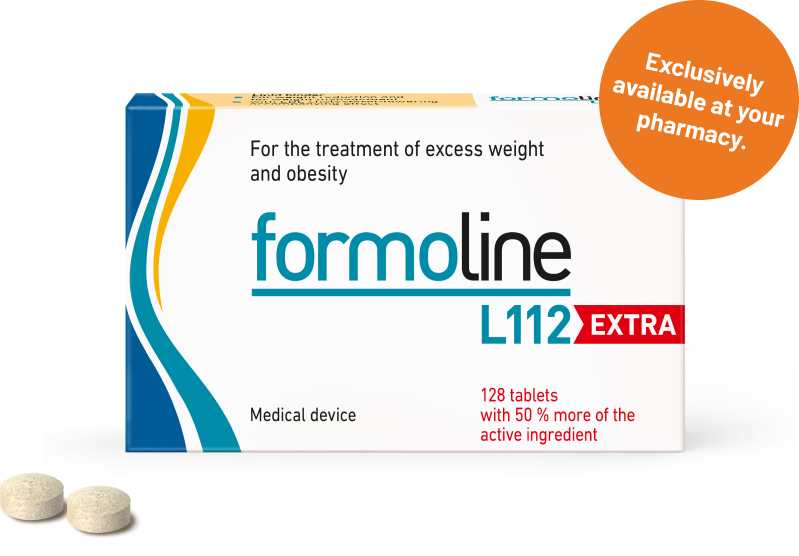
The foundation of all weight management is a basic therapy consisting of dietary modification, increased physical activity and behavioural change. The design of this basic therapy depends, among other factors, on the severity of overweight or obesity.¹ formoline L112 EXTRA provides support during basic therapy.3

Nutrition therapy
Nutrition therapy focuses on reducing overall energy intake. For long‑term weight reduction, a sustained lower‑energy diet is required. A daily energy deficit of about 500–600 kcal, or an individually determined deficit, is recommended. Highly restrictive or one‑sided diets should be avoided.


Behavioural changes
Behavioural changes recommended for people with overweight and obesity include self‑monitoring of behaviours and weight‑loss progress, stimulus control, setting realistic goals, reinforcement strategies (such as rewarding positive changes), relapse prevention, strategies for dealing with weight regain and social support.
Nutrition therapy
Nutrition therapy focuses on reducing overall energy intake. For long‑term weight reduction, a sustained lower‑energy diet is required. A daily energy deficit of about 500–600 kcal, or an individually determined deficit, is recommended. Highly restrictive or one‑sided diets should be avoided.
Behavioural changes
Behavioural changes recommended for people with overweight and obesity include self‑monitoring of behaviours and weight‑loss progress, stimulus control, setting realistic goals, reinforcement strategies (such as rewarding positive changes), relapse prevention, strategies for dealing with weight regain and social support.
Pharmacological therapy
If significant and sustained weight reduction cannot be achieved or maintained with basic therapy alone, pharmacological treatment of obesity may be considered. In Germany, approved options currently include, among others, GLP‑1 agonists and a lipase inhibitor.1
Prerequisites for pharmacological therapy for weight reduction or for maintaining achieved weight loss are:1
BMI ≥ 30 kg/m2
BMI ≥ 27 kg/m² (when using a lipase inhibitor: BMI ≥ 28 kg/m²) and the presence of obesity‑associated risk factors and/or comorbidities, or

Contact
How to reach us
"Thinking beyond GLP-1" is an initiative of Certmedica International GmbH. www.certmedica.com



Address
Certmedica International GmbH
Magnolienweg 17
63741 Aschaffenburg
Germany